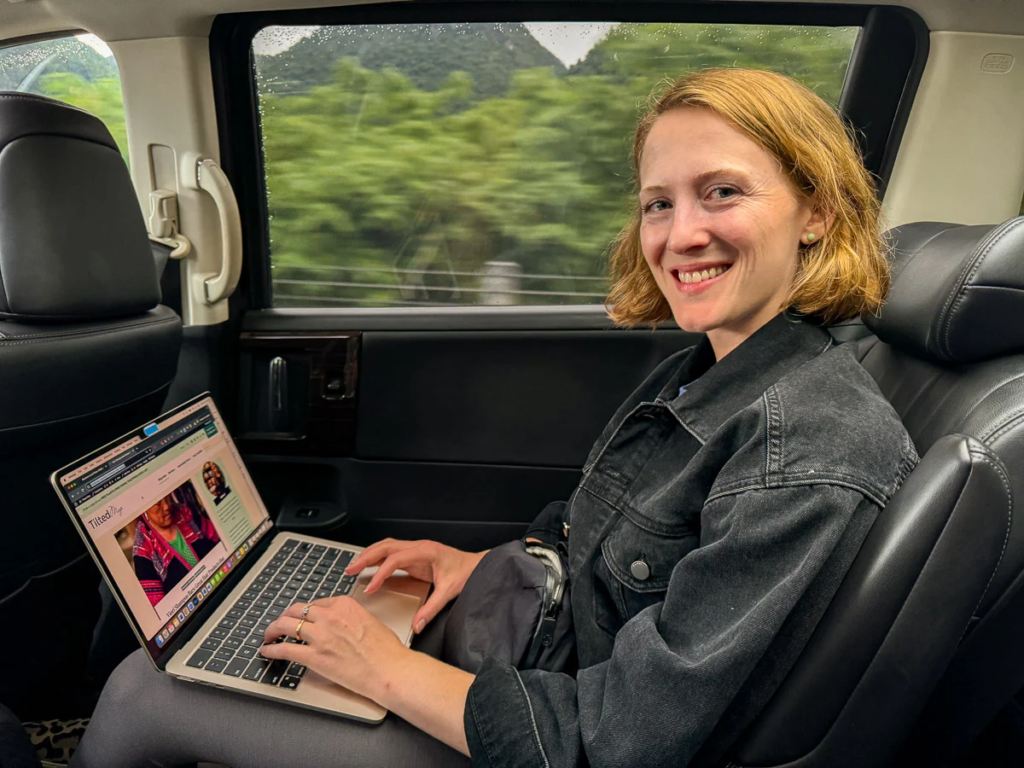
If you’ve ever read a or on this blog, you might have noticed the affiliate disclosure at the top of the article. It’s just under the title, the date, and the author’s name (that’s me, . Hi!)
I’ve been blogging since I in 2014, and started trying to make money blogging in 2019. (So I could afford my favorite hobby, and spend more time on it.)
It was a slow road at first, but after countless hours reading guides, listening to podcasts, paying consultants, and taking some , I now have a full-time job that I built myself. My , Emanuele, even started getting involved as a around 2023.
Anyway, back to the affiliate link topic. Go back up to where you see my name and the date at the top of this post, and then let your eyes scan down a line.
Did you find it?
Good.
But until now, I’ve never taken the time to really explain what that affiliate disclosure means, and how this blog makes money. (Besides in my , which is a legal document and, as its author, I can promise you it’s not a fun read. This will be much more interesting.)
So that’s what I want to do today: Tell you a bit about how affiliate links work, how blogs make money, and how to support Tilted Map, or any other blog, if that’s something you want to do. (Thanks!)
This all began when I was updating my , because I wanted to include an explanation of what affiliate links are… and then the explanations just kept pouring out of me, because I want you to understand how this business works. After all, it’s not just my business; it’s how the internet and social media work, really, and I think everyone should have a basic knowledge of it, now that it’s so fully part of our world.
(The checklist is a free bonus that you get for for my email list, which I definitely recommend you do!)
How do blogs make money? (Quick answer)
If you just want the answer, in short, here are the basic ways most bloggers and influencers make money, with examples and in no particular order:
- Affiliate marketing – earning commissions on products or services (like travel) that we recommend and link to. Here’s an example – I love , and if you buy them by clicking on that link (or you use my discount – TILTEDMAP – code to save 10% on them), then I’ll earn a commission. I also wrote , and I even visited the village in China where the main ingredient is grown. (More on that coming soon!)
- Advertising – just like the ads you see on any website, anywhere on the internet. (This is for blogs, not so much for influencers who only work on social media.)
- Sponsored posts – articles that a company paid a blogger to write, or paid an influencer to post on their social media channels. Here’s an example of one – them and write about our experience.
- Social media “bonuses” – Instagram, Youtube, TikTok and most other social platforms pay creators based on the number of views of their content. Each app’s goal is to keep people using it for as long as possible, so they reward influencers who keep people watching.
- Products – either digital products like ebooks that teach you something, or online courses, or physical products, like merch with the blogger’s brand on it. (I’m thinking about making stickers, would you be interested?)
- Hosted Trips – this is specific to travel bloggers and travel influencers and much less common. For example –
There are other details, but those are essentially the main revenue streams for bloggers and influencers.
Now, let’s talk more about a few of those, and what my experience has been with them, and some common questions.
What are Affiliate Links?
Since I’ve already written this, here’s what the affiliate link explanation says in that plastic-free toiletries checklist I mentioned:
Full disclosure: The links below are affiliate links, meaning I make a small commission if you buy things through them. Sometimes I make as much as… 10¢, and sometimes it’s a few dollars. (This does NOT mean you pay more.)
If for some reason this bothers you, you don’t have to use my affiliate links! I’ve included the name brands below, so you can just Google each product and buy it without my link.
But I’d love if you do end up using my links, because it’s a REALLY big help… Here’s why:
For every product I recommend, I’ve tested at least 5 to 10 others that didn’t make the cut.
I’ve spent hundreds of hours researching the best, most sustainable products, and testing them on myself (and on my friends and family).
I buy most of these products with my own money and the only way I can keep doing it, and keep writing useful reviews, is because people like you buy things through my affiliate links.
So thank you in advance for your support and for helping to keep Tilted Map going.
You mean Amazon links?
There is a common misconception that only Amazon has affiliate links. Not so! Nearly every product and brand has a direct affiliate program. (After all, most companies would rather sell direct to their customers than let Amazon take of their revenue.)
Because I prefer supporting the people behind the that create most of the products I’ve written about, I generally don’t link to Amazon.
But that’s not the case 100% of the time.
For example, if a product doesn’t have a direct affiliate program, I might send readers to Amazon. (Unless I can use a smaller, more ethical Amazon alternative, like .)
Or, occasionally, a good company might only sell on Amazon. (That’s the case with .)
And sometimes, I know that people are just going to go to Amazon instead of buying direct. So I might include one Amazon affiliate link, so that I can still earn a commission on those sales, after putting a lot of work into a . For that same reason, I also have with links to all the sustainable products I recommend, in case people really will only order from there.
But I’m always very clear about encouraging people to buy direct from the brand if it’s an option.